

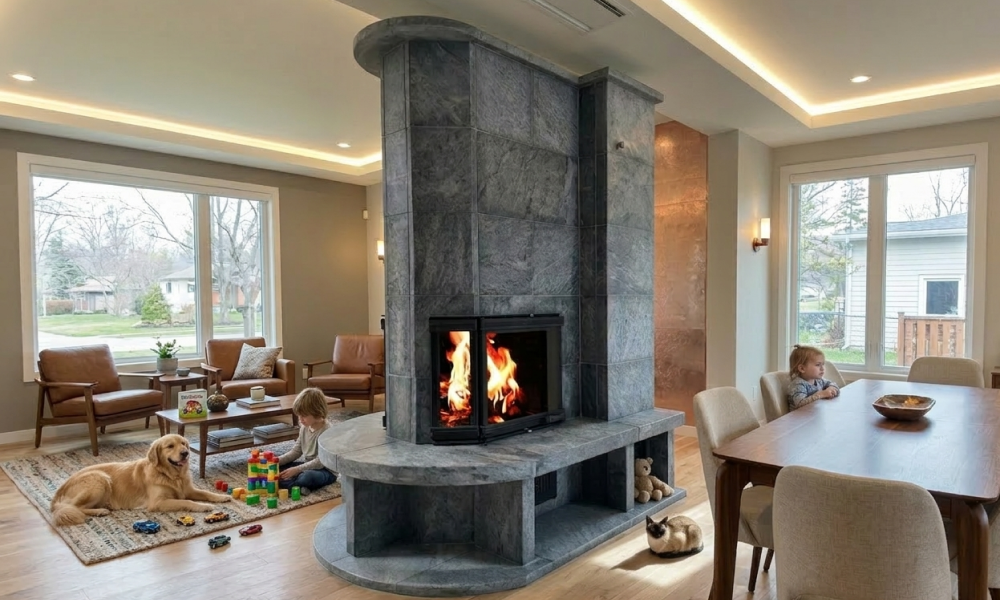
When you think about getting a home heating system, safety is probably your main worry, especially if you have young kids or pets. The picture of a wood-burning heater might make you think right away, “Won’t it be too hot?” What about getting burnt? Can pets or children who are curious get hurt? These are real, essential worries that need honest, complete responses.
The good news is that Greenstone masonry heaters are one of the safest ways for families with kids and pets to heat their homes. They are frequently far safer than wood stoves, gas fireplaces or even forced air systems. Our nationwide network of personally trained craftsmen installs these heaters in homes across the United States and Canada. They can be installed with just a four-inch clearance to combustible walls behind the heater, which shows how well-engineered they are and how low their surface temperatures are, making them safe for families. Like any other heating device, though, they need to be installed correctly, have adequate safety measures in place, and be watched by someone who is old enough to understand how to use them.
This guide looks at masonry heater safety from all angles, answering common questions and giving families practical advice on how to choose the best heating option for their most important family members.
How to Know the Temperatures of Masonry Heater Surfaces
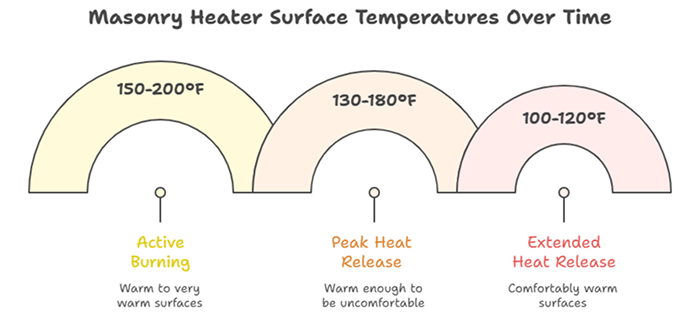
Surface temperatures are the most typical safety concern. To do a true safety evaluation, you need to know how they work and how hot they can really get.
When the Fire Is Active (1-2 Hours)
The space behind the door where the firebox is located gets quite hot, with temperatures inside reaching 1,200°F or more. The thick soapstone walls, on the other hand, do a great job of keeping the outside surfaces warm. Most outside masonry surfaces are between 150 and 200 degrees Fahrenheit, which is warm to very warm but not as deadly as the 500 to 600 degrees Fahrenheit surfaces of metal wood stoves.
Peak Heat Release (2-6 Hours After Firing)
When the fire goes out and the thermal mass releases stored heat, the surface temperatures usually reach their highest point, which is between 130 and 180°F, depending on the size of the heater, the amount of fire, and the specific surface area. This is warm enough to be uncomfortable for lengthy periods of time, but not hot enough to burn you right away if you touch it briefly.
Extended Heat Release (6 to 24 Hours After Firing)
The surface temperatures decrease down over time. Surfaces could reach between 100 and 120 degrees Fahrenheit twelve to eighteen hours after firing. This range is pleasantly warm and doesn’t pose any imminent danger.
When Compared to Other Heating Systems
Metal Wood Stoves
When metal wood stoves are in use, the surface temperatures are usually between 400 and 600 degrees Fahrenheit. A short touch might produce quite bad burns right away. The very hot area is dangerous, and kids and pets should stay away from it at all costs.
Gas Fireplaces
The glass fronts can get as hot as 400-500°F while they are on. Many models say that glass stays extremely hot for more than 30 minutes after the flames are put out. Many companies put big warnings on their gas fireplace glass because child burn incidents are so common.
Forced Air Registers
Floor and wall registers can get quite hot, up to 140-160°F, which can burn small hands and paws. Because they are so low-profile, it’s easy to miss them until someone is hurt.
Masonry Heaters
The warm end of the spectrum is when the temperature is between 130 and 180 degrees Fahrenheit. This is painful for lengthy periods of time, although brief contact usually doesn’t cause major burns right away. Because the surface of the heater is so big, kids or dogs will naturally draw away before they get hurt. When compared honestly to other options, masonry heaters have a safety profile that is either better or the same as the others, and they are also more comfortable and efficient.
Safety Strategies for Different Ages
Babies (0-12 Months)
Because babies can’t move around on their own, this is the easiest time to keep them safe. The most important things to think about are keeping the room at a comfortable temperature (since newborns don’t do as good a job of regulating their body temperature as adults) and setting up basic barriers or family rules that keep older siblings or visitors from putting babies near warm objects.
Kids Aged 1 to 3
The toddler years are the most dangerous for kids. Toddlers are curious and active, but they don’t know how to make good decisions, therefore they need the most careful supervision and protection. Screens or guards for a freestanding fireplace or custom-made ones should be strong enough that children can’t knock them over. Even if there are barriers in place, never leave children alone in rooms with heaters that are on. Teach kids what “hot” means and how to be safe around the heater early on. Even small kids can learn from consistent messages over time.
If your heater has a heated bench, keep a close eye on the temps. Benches are usually much cooler than the main heater surfaces, which can be 90 to 110 degrees, although long-term contact could still be uncomfortable. If you need to, use cushions or covers.
Preschool and Early Elementary (3 to 7 Years)
As kids grow older, they can learn and follow safety guidelines, but they still need to be watched. Set clear, consistent guidelines, like “We don’t touch the heater” or “We stay three steps away unless an adult says it’s okay.” Teach kids how to sense radiant warmth from a safe distance by putting their hands close to the surface without touching it. This will teach them to be mindful while keeping them safe. Under strict supervision, kids of the right age can learn how to construct fires. This teaches them to appreciate fire and gives them confidence.
Older Children (8+ Years)
With the right instruction, older kids (8 and up) can comprehend and handle the safety of masonry heaters on their own. Give more responsibility for safe behaviour while keeping an eye on things that are right for each person’s level of maturity. Teach your family everything they need to know about fire safety, including what to do in an emergency and, if it’s safe for them, how to use a heater under supervision.
Things to Think About for Pet Safety
Dogs
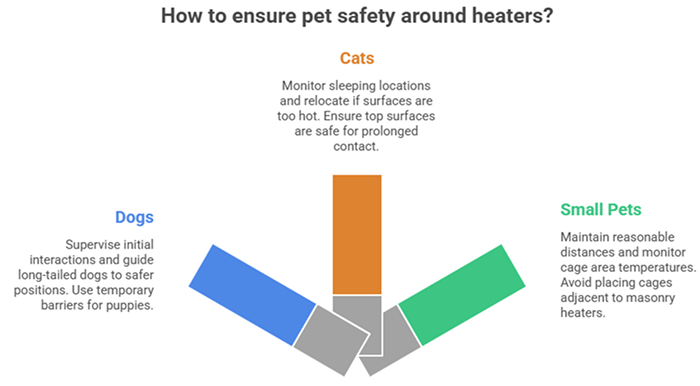
Most dogs soon learn to respect the heater’s warmth and intuitively choose a comfortable distance. When you first introduce dogs to your heater, keep an eye on them. Most of the time, they will come up, feel the heat, and pick their favourite spot. Keep an eye on long-tailed dogs to make sure they don’t accidentally touch the ground, and if they do, move them to a safer spot. Temporary barriers during training help puppies learn safe habits that last.
Cats
Cats are animals that look for warmth and will take over the warmest places in your home. They can handle warmer surfaces than people or dogs, but even cats have their limits. Keep an eye on where your cats sleep and move them if they’re on surfaces that are 130-140°F or higher. If your heater has accessible top surfaces, make sure the temperatures are safe for long periods of time. Some owners put cushions or mats on cooler heater surfaces just for their cats. Watch the door openings when loading the fire and keep cats away from the flames.
Small Pets (Rabbits, Guinea Pigs, etc.)
Never put little caged pets right next to masonry heaters. Radiant heat can make little animals feel stressed since they can’t get away. To keep little pets comfortable, keep adequate intervals between them and check the temperatures in their cages.
Design Elements That Make Things Safer
Low Surface Temperatures Because of the Soapstone Mass
The soapstone core and shell spread heat over a vast area, which keeps the outside temperature far lower than that of metal heaters. This is feasible because soapstone can slowly absorb, store, and release heat. The result is a heater that you can get close to and feel warm radiant heat from across the room and touch without getting hurt right away.
Heated Benches
Built-in bench seating gives family members a pleasant place to sit that isn’t too hot, usually between 90 and 110 degrees Fahrenheit. Children can learn that the heater is a source of comfort rather than danger when there are plainly safe heated seats around.
Sealed Combustion
These masonry heaters burn all of the fuel in the firebox door, which stays closed during the whole process. This stops logs from rolling out, lowers the chance of embers and sparks flying around, and keeps smoke from getting into living spaces while refuelling. This is a big safety benefit over open fireplaces and many wood stoves.
Approved Clearances
All Greenstone masonry heaters meet the requirements of ASTM E 1602 and can be installed with a four-inch space between them and walls that could catch fire. Because the heater’s low surface temperatures were designed into it, this clearance criteria enables for flexible installation in real family homes while still meeting all safety requirements.
Useful Safety Gear
Barriers and Guards
Heavy screens that stand on their own serve as both visible and tactile reminders to keep a safe distance. Child safety gates set up around the heater work well as obstacles for toddlers and can be taken down as the kids get older. Strategically placing furniture can generate natural traffic patterns that keep people at a safe distance without the need for barriers.
Temperature Monitoring
Magnetic surface thermometers let you keep an eye on the temperatures of your heater in a way that is not biased. This helps you learn how your heater’s temperature changes over time and makes it easier to tell your kids when surfaces are the hottest. You can check temperatures from a distance with infrared thermometers.
Fire Safety Equipment
Make sure that all of your home’s smoke and carbon monoxide detectors are functional. When used correctly, these heaters emit very little carbon monoxide because they burn everything completely. However, detectors are still very important for safety. Make sure that all adults know where the fire extinguisher is and how to use it.
The Quality of the Wood and the Air
When used correctly, masonry heaters don’t release much pollution. However, to work properly, they need dry, high-quality fuel. Only use cord wood that has been tested and found to have less than 15% moisture. You can test freshly split pieces before burning them with a simple moisture meter that costs around $20. Wet wood not only makes a lot less heat, but it also makes a lot more smoke and particles. This is especially bad for families with kids, pets, or those who are sensitive to breathing.
Burn only untreated hardwood like oak, hickory, sugar maple, and beech. These woods provide the hottest and cleanest burns. Do not burn pressure-treated wood, fake logs, or anything else that has chemicals in it. When you use seasoned hardwood, these heaters burn cleanly and completely, leaving fine white ash and very little smoke. This means that the air inside and outside your home is better than with most other wood-burning heaters.
Teaching How to Be Safe With Fire and How to Make Good Habits
Toddlers and Preschoolers
Keep it simple and quiet. Use words like “Hot,” “Don’t touch,” and “Stay back” over and over again. Instead of scaring kids about fire, gently divert them.
Elementary School Age
More information about how the heater works, why it gets hot, and how to stay safe around it. Let kids help you make rules for keeping the family safe.
Older Kids and Teens
Full fire safety training, including how to act in an emergency and possibly supervised operational training.
Family Safety Routines
Make sure kids and pets are in safe places before you start a fire. After the fires are out, tell everyone that the heater stays warm for a long time. The thermal mass keeps giving off heat long after the fire is out. Set up and practise fire emergency plans that include meeting places and ways to get out.
What Families Really Go Through
Families with masonry heaters and young kids always say that safety issues, while evident at first, can be handled with common sense procedures. Some common themes are:
- Kids learn quickly; most of them just need one or two gentle reminders to keep their distance.
- The bright warmth gives unambiguous feedback: kids feel the heat before they touch things and automatically stay at a comfortable distance.
- Many families say that their kids now see the heater as a place for the whole family to gather instead of being afraid of it.
- Real burn incidents with properly built and supervised masonry heaters are rare. Most families say they have never had any incidents, except maybe one brief contact during the learning phase.
- Pets immediately find their favourite warm locations near the heater and can move around without any worries.
When to Think About Other Ways to Heat
Even though masonry heaters are quite safe for families, there may be times when other options are better. If family members have serious mobility or cognitive problems that make it hard for them to feel or respond to warmth, alternative heating might be safer. Alternative heating may be needed in very tiny locations where it’s not possible to keep safe distances. Also, if you rent your property instead of owning it long-term, the commitment to installing a masonry heater may not make sense, even if safety is a concern.
Are You Ready to Safely Heat Your Home?
Every day, families with kids and pets effectively and safely heat their homes with masonry heaters. They keep everyone in your home, both two-legged and four-legged, safe and warm. They do this by being installed by qualified professionals, using the right kind of wood, and having good family safety habits.
The important thing is to think about safety in a practical way instead of a scared way. Know what the real threats are, take the right steps to protect yourself, and educate kids how to be safe at their age. The same rules that keep kids safe around stairs, swimming pools, and kitchens also apply to masonry heater safety.
Get in Touch With a Greenstone Expert Today
Are you ready to look into masonry heater choices for your family?
Call us today to talk about your family’s needs, any safety issues you may have, and how to create a heating system that will keep your whole family comfortable, save energy, and give you peace of mind.